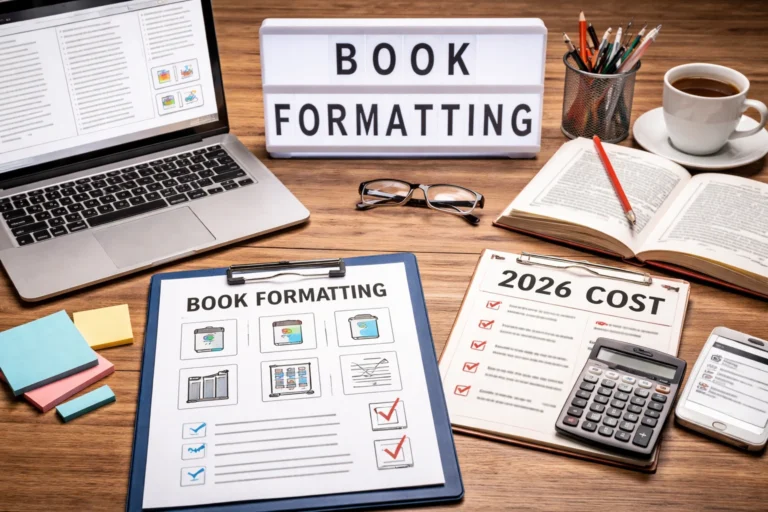
Book formatting is the process of arranging a manuscript so it is ready for professional publishing in print or eBook form. It includes layout, typography, spacing, chapter headings, margins, page numbers, front matter, and file preparation. Good book formatting improves readability, gives your book a polished look, and helps meet publishing platform requirements.
If you are asking What Is Book Formatting, the simple answer is this: it is the process of turning your raw manuscript into a polished, readable book that works properly in digital and print formats.
That may sound technical, but it matters more than many authors expect. A strong story can lose readers fast if the spacing is messy, page breaks are awkward, or chapter headings look inconsistent. That is why many authors explore book formatting services early in the publishing process, especially when they want a clean, professional result without learning every formatting rule from scratch.
In practical terms, What Is Book Formatting really comes down to reader experience. It shapes how your book looks on a Kindle, how it feels in paperback, and how easily someone can move through each chapter without distraction. Good formatting is invisible in the best way. Readers stay in the story, not in the margins, the page numbers, or the random font changes that should never have made it into the final file.
This guide breaks down What Is Book Formatting, how ebook vs print formatting differ, and what authors should know before publishing. Along the way, I will walk through manuscript formatting, professional book layout choices, self-publishing needs, and the small design details that quietly make a book feel credible.
What Is Book Formatting, Really?
When people ask What Is Book Formatting, they often mean one of three things without realizing it. They might be thinking about manuscript formatting for submission, the layout of a self-published book, or the package needed for a book proposal. Those are related, but they are not the same thing.
A manuscript meant for literary agents or traditional publishers follows fairly standard submission rules. You will often see Times New Roman, 12 pt font, double spacing, numbered pages, indented paragraphs, and a simple title page. That format is not meant to look like a finished book. It is meant to be easy to review, edit, and annotate.
A self-published book is different. Once you move beyond manuscript formatting, the job becomes visual and structural. You are no longer trying to impress an agent with clean pages. You are creating a product readers will buy, download, and judge within seconds. That is why book formatting explained properly has to separate draft preparation from final publication layout.
A book proposal adds another layer. For nonfiction especially, authors may need a table of contents, sample chapters, an author bio, audience analysis, comparative titles, competitive titles, and notes on marketing, publicity, and promotion. So when someone asks What Is Book Formatting, the honest answer depends on where the book is going and who will read it next.
Manuscript Formatting vs Published Book Formatting
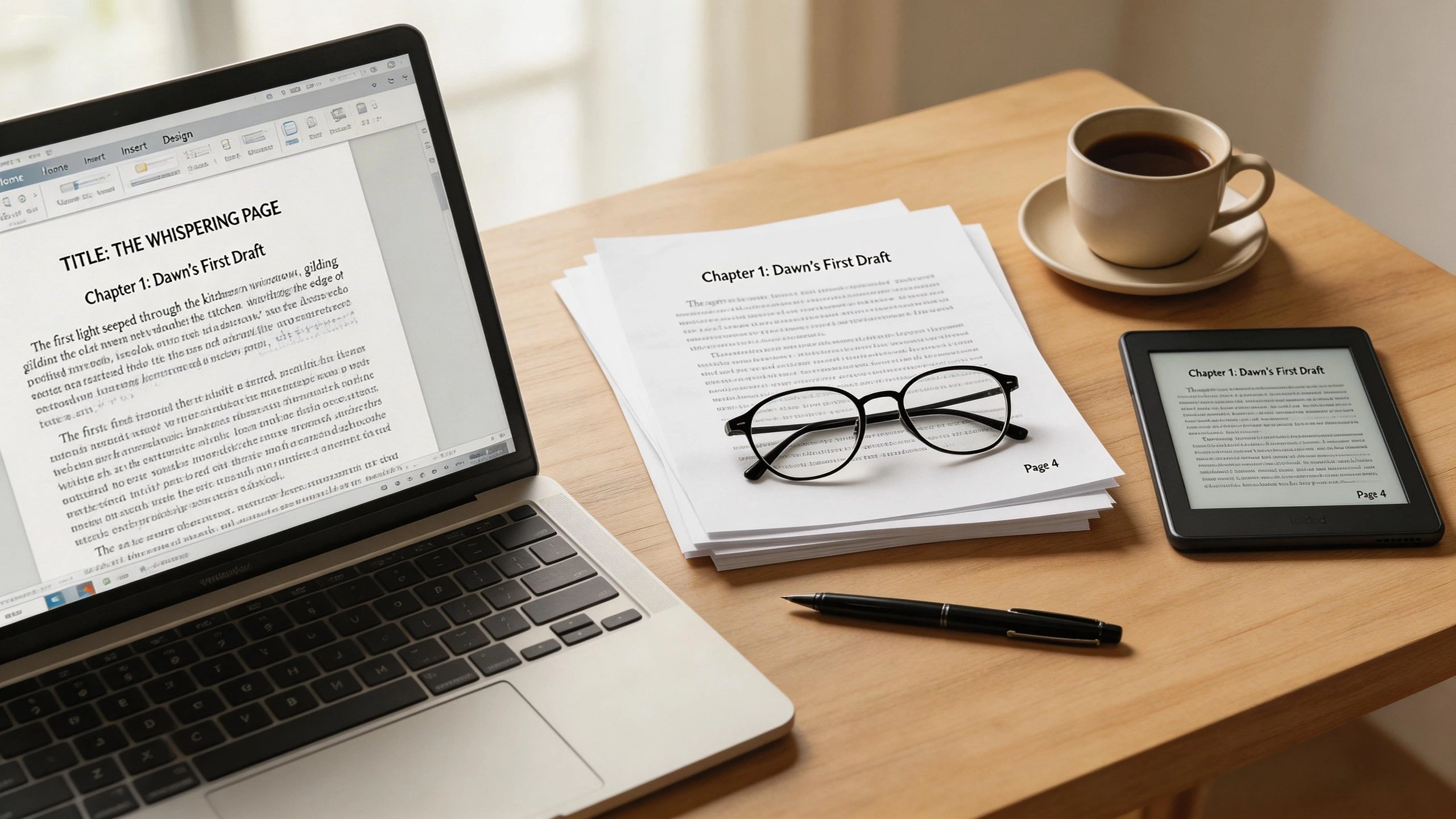
One of the biggest mistakes new authors make is assuming their Microsoft Word doc is basically ready for readers. It usually is not. A Word file or Google Docs draft is a writing document, not a finished book file. Before moving to publication, it helps to understand the basics of how to format a book manuscript. A published book file is a designed reading experience.
In manuscript formatting, simplicity is the point. Agents and editors want consistency. They are not looking for decorative fonts, fancy headers, or unusual chapter art. They want a readable file, often submitted through an online submission form, that follows publisher guidelines and keeps the focus on the writing.
In a published book formatting service, the priorities shift. Your chapter openings, margins, pagination, front matter, and spacing all need to support reading comfort. Even details like leading, kerning, or how paragraph indents appear can change the mood of a page. Readers may not know those terms, but they absolutely notice when something feels off.
That distinction matters because What Is Book Formatting is not just a style question. It is a workflow question. Are you preparing a manuscript for industry review, or are you creating a finished book for sale? Those are different deliverables, and confusing them leads to a lot of frustration.
eBook vs Print Formatting: Why They Are Not Interchangeable
This is where many authors get tripped up. ebook vs print formatting is not a minor difference. It is the difference between a flexible digital file and a fixed-page product. If you use the same layout for both, one version usually suffers.
An eBook is reflowable. That means the text adjusts based on the reader’s device, screen size, and settings. Someone can enlarge the font, change the font family, or shift line spacing, and the content should still hold together. In eBook files, the design needs to be lighter and more adaptable.
Print books are fixed. Every page is set in advance. The trim size, margins, page numbers, headers, chapter starts, and line breaks all matter because they will never move after printing. A print file needs controlled spacing and precise layout choices. That is why professional book layout becomes especially important for paperbacks and hardcovers.
If you are still asking What Is Book Formatting in practical terms, this is one of the clearest answers: it is making sure your book works in the format readers actually buy. An eBook needs flexibility. A print book needs control. One is responsive. The other is exact.
How eBook Formatting Works
For an eBook, the goal is clarity and compatibility. You want headings that convert cleanly, chapter breaks that display properly, and images that do not break on different devices. Your file may begin as a Microsoft Word doc, but it often ends as an EPUB or another digital format, depending on the platform.
You also need restraint. Fancy fonts, elaborate spacing tricks, and fixed layouts can create headaches in digital files. A clean structure nearly always beats a decorative one. This is especially true when formatting a book for self-publishing on retailers that serve many device types.
A lot of authors learn this the hard way. They spend days making a file look beautiful on a laptop screen, then open it on a Kindle app and find strange page gaps, broken indents, or headings floating in odd places. That is not a writing failure. It is a formatting mismatch.
How Print Formatting Works
Print formatting is more architectural. You are building pages that will be physically produced, so details like chapter length, running headers, line spacing, and the balance of white space matter a great deal. Print readers notice cramped pages, sloppy widows and orphans, and uneven margins faster than authors expect.
This is also where font decisions become important. A serif font is common for body text in print because it tends to feel traditional and readable across long sections. A sans serif font may work well for headings or modern nonfiction, but body copy needs careful consideration. Good print formatting is part readability, part rhythm, part restraint.
When people talk about book formatting explained in a useful way, this is the kind of difference they should mean. You are not just exporting a file into two formats. You are preparing two separate reading experiences.
The Parts of a Professionally Formatted Book
Once you understand What Is Book Formatting, the next question is usually what actually gets formatted. The answer is more than chapter text. A finished book includes structure before, during, and after the main content.
Front matter can include a title page, copyright page, dedication, table of contents, and sometimes a cover blurb or endorsements depending on the format. Back matter may include acknowledgments, discussion questions, bonus content, or a preview of another book. Each part has its place, and that place affects readability and professionalism.
Inside the body, consistency is everything. Chapter headings should follow one style. Paragraphs should be handled the same way throughout. Scene breaks should be clear. Pagination should make sense. Even small issues like orphans and widows can make a page feel unfinished if left alone.
That is one reason some authors hire an interior designer or formatting specialist. It is not about making the book flashy. It is about making it feel settled, intentional, and easy to trust. Readers may not say, “I love the leading on page 48,” but they do respond to pages that feel balanced.
What Self-Publishers Need to Know Before Formatting
For self-published authors, What Is Book Formatting usually becomes urgent right before launch. The manuscript is done, the cover is ready, and suddenly the interior still feels messy. That is normal. It is also fixable if you approach the process in the right order.
Start by knowing your genre and reader expectations. A memoir, business book, workbook, and fantasy novel all have different layout needs. Genre also shapes word count expectations, chapter length patterns, and front matter choices. Good formatting supports the kind of reading your audience already expects.
Next, decide where the book will live. Print-on-demand platforms, direct downloads, and eBook retailers all have file requirements. Some want PDF for print interiors. Others want EPUB or a carefully cleaned Word file. Following platform specs matters just as much as following design best practices.
This is where real-world publishing workflow knowledge matters. Writers such as Tiffany Hawk, known as a writing coach, have emphasized the importance of understanding where a manuscript sits in the larger publishing path. A document for agents is one thing. A self-published product is another. When What Is Book Formatting is answered with that distinction in mind, authors make better choices.
Formatting a Book for Self-Publishing Without Cutting Corners
There is nothing wrong with doing your own formatting if you enjoy detail work and have time to learn the rules. But formatting a book for self-publishing is not just about making it “look okay.” It is about avoiding amateur signals that can damage reader trust.
Those signals are often small. Extra spaces between paragraphs. Inconsistent chapter titles. Random font shifts. Bad page breaks. A title page that looks copied from a school paper. None of these ruin a book on their own, but together they can make a reader question the quality of everything else.
A clean, professional interior tells readers you respect their time. It also helps reviewers, bloggers, and industry contacts take the book seriously. If you are publishing independently, your formatting becomes part of your brand whether you realize it or not.
Common Formatting Mistakes Authors Make
One of the most common problems is mixing manuscript rules with finished-book design. An author may leave double spacing in a print layout because that is what they used for submission. Or they may center every heading and use oversized fonts because they want the pages to feel “bookish.” Neither choice automatically improves readability.
Another issue is relying too heavily on software defaults. Programs are useful, but they do not know the tone of your book, your genre expectations, or what your audience finds easy to read. A default setting may be acceptable, but it is not always thoughtful. That difference shows on the page.
Then there is the temptation to rush. Formatting often happens late, after months or years of drafting, revising, and proofreading. At that stage, authors are tired. They want the book out in the world. But the final layout deserves patience because it affects every reader’s first impression.
If you want a practical shortcut, Learn more about our book formatting services to get your eBook and print books professionally formatted. For many authors, that support removes the stress of managing two different file types while still giving the book a polished finish.
Why Professional Book Layout Matters More Than Authors Expect
A good layout does not scream for attention. It quietly supports the story, argument, or information on the page. That is why professional book layout often feels subtle. The margins are comfortable. The headings are clear. The text blocks feel stable. Everything looks like it belongs.
That calm, professional feel builds trust. It also supports E-E-A-T in a practical sense. Experience shows in how well the file works on different platforms. Expertise shows in layout choices that fit the genre. Authority shows in consistency and attention to detail. Trust grows when the book feels intentional from the first page to the last.
I once picked up a self-published paperback with a strong premise and a beautiful cover, but the inside text felt cramped and the page numbers jumped awkwardly between chapters. I kept reading, but I also kept noticing the design. That is the problem. Formatting should not compete with the content. It should support it quietly.
That is why What Is Book Formatting is worth taking seriously. It is not cosmetic. It is functional, psychological, and commercial all at once.
Submission, Copyright, and File Preparation Basics
If your path includes agents or publishers, always review their publisher guidelines before sending anything. Many still prefer traditional manuscript formatting, including Times New Roman, 12 pt font, double spacing, numbered pages, and standard indented paragraphs. Some request sample chapters, an author bio, or a full book proposal. Others want files uploaded through an online submission form.
If you are self-publishing, your concerns shift toward file quality, trim size, distribution requirements, and copyright law basics. You may need a properly prepared PDF for print and a separate eBook file for digital stores. Using the wrong file type in the wrong place is one of the quickest ways to create avoidable issues.
This is another place where What Is Book Formatting gets clearer with context. It is not a one-size-fits-all task. It depends on whether you are pitching, printing, or publishing. Understanding that saves time and helps you avoid fixing the same file three different times.
How to Choose the Right Format for Your Book
The best way to choose your formatting path is to start with your publishing goal. Are you querying literary agents? Selling direct to readers? Publishing on Kindle and print-on-demand platforms? Each goal leads to a different formatting checklist.
If your first priority is digital release, focus on eBook readability, clean chapter structure, and platform compatibility. If your main product is a paperback, invest more attention in margins, typography, and page design. If you are doing both, plan for two separate versions from the start rather than trying to force one file into every job.
And if Kindle is part of your strategy, this is a useful next step: Format Your Book for Kindle. It pairs well with the broader question of What Is Book Formatting because it helps turn theory into action for one of the most common self-publishing paths.
The main thing to remember is that formatting is not there to impress other writers. It is there to make reading easy. That is the standard that matters.
Final Thoughts on What Is Book Formatting
So, What Is Book Formatting? It is the bridge between writing a manuscript and delivering a real book people can read comfortably. It includes structure, spacing, typography, layout logic, and file preparation for the platform you plan to use. It also asks you to think differently about eBooks and print books, because they are built for different reading experiences.
If you remember only one thing, let it be this: good formatting is reader service. It helps your ideas land cleanly. It makes your work look credible. And it gives your book the professional finish it deserves, whether you are submitting to literary agents, preparing a book proposal, or publishing independently.
That is why What Is Book Formatting matters so much. It is not just a technical step at the end. It is part of how your book earns trust the moment someone opens the first page.
Top Five FAQs
1. What is book formatting?
Book formatting is the process of organizing and styling your manuscript so it looks professional and reads smoothly in print or digital form. It includes font choice, spacing, margins, chapter headings, page breaks, and overall layout.
2. What is the difference between eBook and print formatting?
The main difference is that eBook formatting is flexible and reflowable, while print formatting is fixed. eBooks adjust to different screen sizes and reader settings, but print books require exact margins, pagination, and page layout.
3. Why is professional book formatting important?
Professional book formatting improves readability, gives your book a polished appearance, and helps create a better reading experience. It also makes your book look more credible, which is especially important for self-publishing authors.
4. Can I format my own book for self-publishing?
Yes, you can format your own book if you understand the requirements for both digital and print platforms. Many authors use tools like Microsoft Word or Google Docs at first, but professional help can save time and prevent common layout mistakes.
5. What should be included in a properly formatted book?
A properly formatted book usually includes a title page, copyright page, table of contents if needed, consistent chapter headings, readable paragraph spacing, and clean typography. Print books also need proper pagination, margin settings, and attention to details like widows and orphans.