If you are getting ready to publish, one of the first practical questions that comes up is simple: what is the real book formatting services cost in 2026? Not the vague answer. Not the sales-page answer. The real one. For most authors, formatting sits in that uncomfortable space between “I can probably do it myself” and “I really do not want my book to look amateur.”
That is why many authors start by looking at professional book formatting services. A good formatter does more than make the pages look neat. They help turn a manuscript into something readers can move through easily, whether it is a Kindle ebook, a paperback, or a hardcover edition.
The truth is, book formatting services cost can vary a lot depending on the type of book, the condition of the manuscript, and whether you need ebook formatting services, print book formatting, or both. In 2026, authors are paying closer attention to formatting because readers notice bad spacing, odd page breaks, broken tables of contents, and sloppy layout faster than ever.
Expert quotes
“Good formatting should feel invisible to the reader. If someone notices spacing, broken chapter flow, or awkward page design, the book already feels less professional.”
A well-formatted book feels invisible in the best way. The reader does not stop to think about margins, chapter spacing, or paragraph indents. They just keep reading. That is the standard professional book formatting that is supposed to meet, and that is exactly why pricing matters.
| Formatting Type | Basic Range | Standard Range | Advanced Range |
|---|---|---|---|
| Ebook Formatting | $50 | $100–$150 | $200–$350 |
| Print Book Formatting | $100 | $150–$300 | $350–$800+ |
| Ebook + Print Bundle | $150 | $250–$500 | $600–$1,000+ |
| Hardcover Formatting | $150 | $250–$400 | $500–$900+ |
What Is the Average Book Formatting Services Cost in 2026?
A realistic book formatting services cost in 2026 usually falls into a few pricing bands. For a basic ebook, many authors pay between $50 and $250. For standard print book formatting, the range is often $100 to $500. If you want both ebook and print-ready files, many providers bundle the work between $200 and $800, depending on complexity.
At the lower end, you usually get basic manuscript formatting with limited customization. At the higher end, you are paying for better typography for books, a cleaner interior book layout, custom chapter styling, trim size formatting, and fewer formatting errors in books. The price is not only about page count. It is about how polished the final reading experience needs to be.
For example, a clean fiction novel with simple chapter headings is usually cheaper to format than a nonfiction book with tables, callout boxes, footnotes, images, and section breaks. A poetry book, workbook, cookbook, or children’s title can cost even more because the layout design takes longer and needs more manual work.
That is where many first-time authors get surprised. They think formatting means clicking a few buttons in Word. In reality, professional book formatting often involves rebuilding layout logic, fixing inconsistent styles, handling page numbering, adjusting margin and spacing setup, and preparing separate files for ebook and print platforms.
Why Book Formatting Prices Vary So Much
The biggest reason book formatting services cost changes from one quote to another is that not all manuscripts need the same level of work. A manuscript that is already clean, consistent, and edited is much faster to format than one with random spacing, mixed fonts, manual indents, and broken page breaks.
Another reason is file type. Ebook formatting services and print book formatting are not the same job. Ebook layout design needs reflowable formatting that works across Kindle and other devices. Print formatting needs to be fixed interior book layout, stable page numbering, proper trim size formatting, and press-ready consistency.
Some book formatting company packages also include extras that push the price up. These may include clickable table of contents creation, image placement, drop caps, custom scene breaks, front matter styling, back matter formatting, Amazon KDP formatting checks, or revisions after proof review. Those details matter because they directly affect how professional the book looks.
Amazon KDP – eBook Manuscript Formatting Guide
Best for supporting points about Kindle formatting, clickable table of contents, and ebook file preparation. Kindle formatting guidelines
In short, one quote may only include basic formatting, while another includes formatting for self-publishing, print-ready files, device testing, revision rounds, and platform-specific guidance. On paper, those quotes look far apart. In practice, they may not be offering the same service at all.
Ebook Formatting Prices in 2026
Basic ebook formatting services
If your manuscript is a standard novel or straightforward nonfiction title, ebook formatting prices in 2026 often begin around $50 to $150. This usually covers Kindle formatting, simple chapter formatting, paragraph consistency, and a clickable table of contents.
This price point works best for books with plain text, minimal graphics, and no complicated structure. It is often enough for authors publishing on Amazon KDP who just want a readable, functional ebook without visual extras.
Still, even basic ebook formatting should not feel messy. Readers are quick to notice weird spacing, broken chapter starts, or inconsistent indents. Those issues can make a book feel self-published in the worst possible way.
Advanced ebook layout design
If your book includes lists, visuals, embedded links, styled headings, or more detailed structure, the cost often moves into the $150 to $350 range. This level of professional book formatting usually includes better navigation, stronger styling consistency, and more attention to how the book behaves across devices.
Nonfiction authors often need more than the basics. A business book, guidebook, or educational title usually has more layout logic than a simple novel. That means the formatter needs to think about readability, not just file conversion.
A good book formatting service for authors will also make sure the ebook does not break when uploaded to Kindle or viewed on smaller screens. That part matters more than many authors realize, because device inconsistency is one of the most common formatting mistakes in books.
Print Book Formatting Costs in 2026
Standard paperback formatting
For most novels and standard nonfiction books, print book formatting in 2026 usually costs between $100 and $350. This includes interior book layout, chapter formatting, margin and spacing setup, trim size formatting, running headers if needed, and page numbering.
Paperback formatting is where details start to show. Small mistakes that look harmless on a screen can become obvious in a print proof. A bad gutter margin, an awkward blank page, or a chapter opening placed badly can make the entire book feel low quality.
That is why many authors who skip professional formatting end up paying later. They upload the file, order a proof, see the problems, and then have to fix everything under deadline pressure.
Complex print formatting
For books with images, tables, footnotes, work pages, or more creative layout design, print book formatting often lands between $350 and $800 or more. Hardcover formatting can also cost extra, especially if the trim size, page count, and layout rules differ from the paperback edition.
This is where book formatting services cost climbs quickly. Complex formatting is more manual. It often requires testing, proof adjustments, and deeper attention to layout balance across the whole manuscript.
A formatter is not just making pages pretty. They are solving practical reading and production problems. That is why the price difference between simple and complex books can be significant.
What You Usually Get in Professional Book Formatting
A strong professional book formatting package usually includes more than many authors expect. At minimum, you should look for clean manuscript formatting, chapter formatting, consistent typography for books, paragraph styling, page numbering, and properly prepared print-ready files or ebook files.
For ebooks, you should expect Kindle formatting, a clickable table of contents, and clean navigation. For print, you should expect a stable interior book layout, correct trim size formatting, readable margins, and files that match platform requirements for self-publishing services.
Some providers also include revision rounds after proofing. This matters because formatting often looks fine until you review the book in print or on an e-reader. Fixing those final details is part of what separates cheap output from professional book formatting.
If you are comparing services, ask exactly what is included. A low quote may leave out revisions, Amazon KDP formatting checks, front matter formatting, or support for both ebook and paperback formatting. That is how cheap quotes become expensive later.
DIY vs Professional Book Formatting
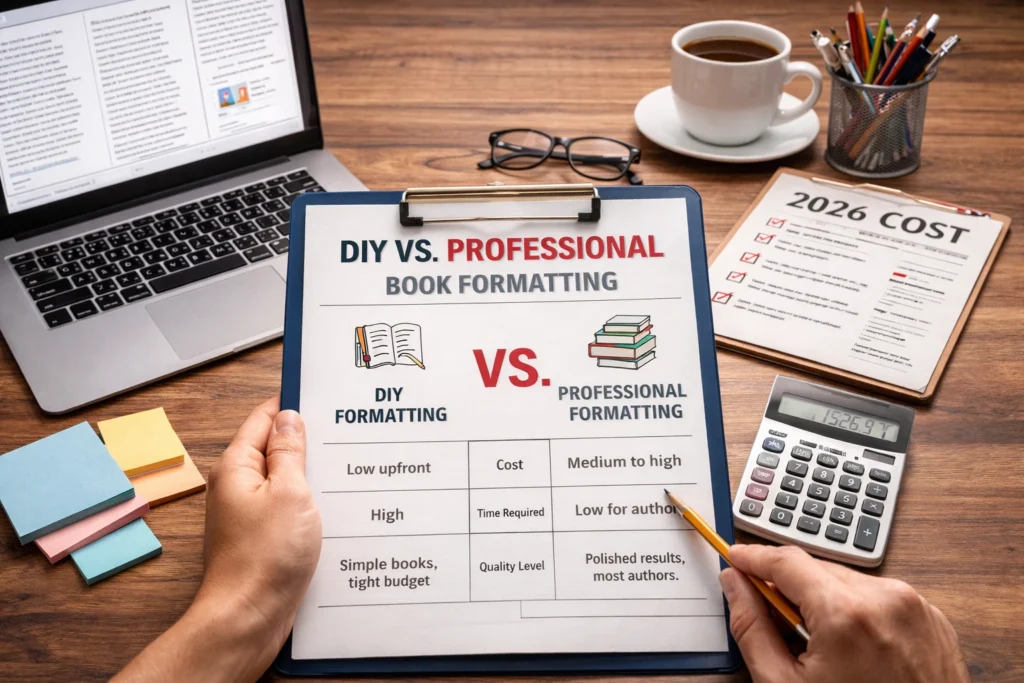
A lot of authors ask whether they should do the formatting themselves to save money. It is a fair question. If the book is simple, the budget is tight, and the author is comfortable learning layout rules, DIY can work.
Expert quotes
“Book formatting is not just cosmetic. It affects readability, device compatibility, print quality, and how seriously readers take the book from the first page.”
But there is a tradeoff. DIY formatting saves cash upfront, yet it often costs time, energy, and confidence. Many authors underestimate how long it takes to clean a file, correct spacing, rebuild headings, test ebook behavior, and produce print-ready files that upload correctly.
Professional formatting is often worth it when your book is important to your reputation, business, or long-term sales. A consultant publishing a lead-generation book, for example, is not just selling copies. They are selling credibility. In that case, paying for a book formatting company is often the smarter move.
A simple way to think about it is this: if you would notice a poorly designed website and question the business behind it, readers do the same with books. Formatting influences trust more than authors often expect.
Affordable Book Formatting Services: What Is Actually Worth Paying For?
The phrase affordable book formatting services sounds great, but cheap does not always mean good value. In this space, low prices can sometimes mean rushed conversion, automated tools, poor ebook layout design, or little support if the file breaks during upload.
What you really want is fair pricing for clear scope. That means knowing whether you are paying for ebook formatting services, paperback formatting, hardcover formatting, revisions, platform support, or just a quick file export.
Affordable services make sense when your manuscript is already edited, structurally simple, and close to production-ready. In that case, you may not need a premium package. But if your book has visual elements, advanced structure, or a brand-sensitive purpose, going too cheap can backfire.
A good book formatting service for authors should explain what is included in plain language. If the quote sounds unclear, too broad, or oddly low, ask questions before you commit.
Cost by Book Type
Fiction books
Fiction is usually the most affordable category for professional book formatting. Most novels follow familiar layout patterns, so formatting is faster and more predictable. A typical fiction book may cost $100 to $300 for print and ebook together if the manuscript is clean.
Nonfiction books
Nonfiction often costs more because the structure is less uniform. Headings, lists, callouts, tables, and references all affect the final layout. Many nonfiction titles land in the $250 to $600 range for combined formatting.
Workbooks, cookbooks, children’s books, and illustrated books
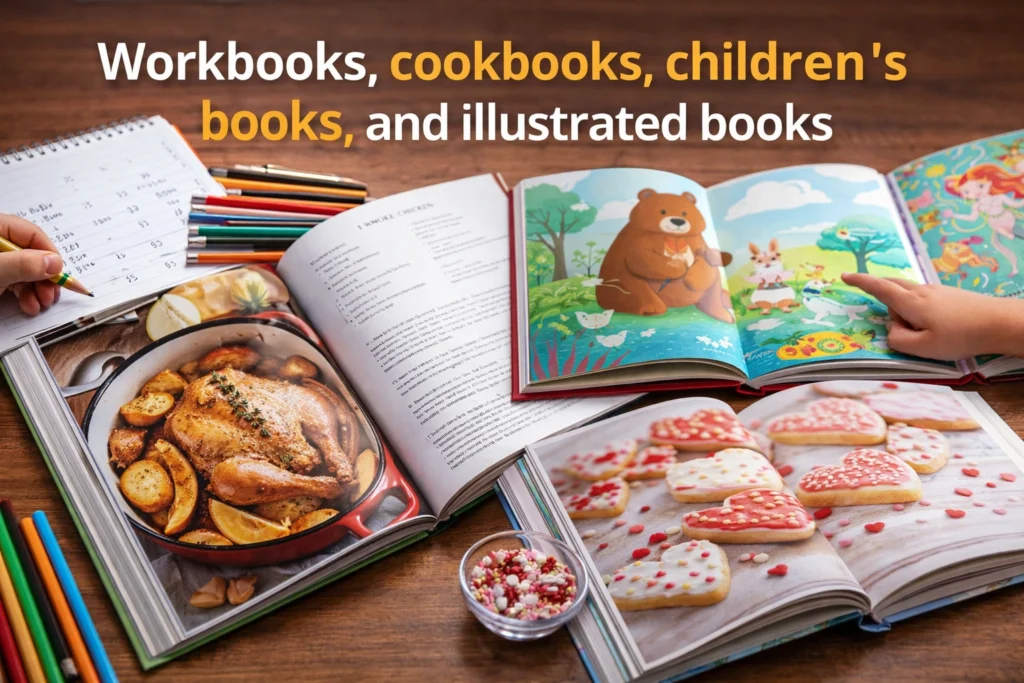
These are usually at the high end. If the book depends on visual placement, repeated design patterns, or page-by-page layout control, the formatter is doing much more than standard manuscript formatting. Costs can start around $400 and climb much higher depending on the complexity.
This is one reason broad pricing advice can be misleading. When people ask, “What is the average book formatting services cost?” the honest answer depends heavily on what kind of book they are publishing.
Platform-Specific Guidance Matters More in 2026
Formatting is not only about appearance anymore. It is also about platform compatibility. Amazon KDP formatting requirements, Kindle behavior, trim size expectations, and print file standards all shape the work.
A formatter who understands Amazon KDP formatting can help prevent upload errors, spacing issues, and proofreading surprises. That matters because self-publishing has become more competitive, and readers are less forgiving of books that look unfinished.
If you are publishing on Kindle, this guide on Format Your Book for Kindle can help you understand what the process involves before you hire anyone. It is useful context, especially if you are comparing DIY and professional options.
Authors who are still exploring providers should also review this list of Top 10 Book Formatting Services in 2026 to see how different service models compare. It helps separate basic conversion services from companies offering real professional book formatting.
Common Formatting Mistakes That End Up Costing More
One of the easiest ways to waste money is to pay for formatting before the manuscript is truly ready. If the text is still changing, every round of revisions can create extra work. That means extra cost or extra delays.
Another common issue is sending a messy file to the formatter. Mixed fonts, manual tabs, inconsistent spacing, broken headings, and homemade page setup all slow the job down. A cleaner manuscript usually leads to a lower book formatting services cost.
Some authors also pay for the wrong service. They order only ebook formatting, then realize they need print-ready files too. Or they choose a provider who handles simple novels well but struggles with illustrated nonfiction. That mismatch can lead to rework and frustration.
The safest approach is to match the formatter to the actual book. Not every book formatting company is equally strong across ebooks, paperback formatting, and complex interior book layout.
How to Choose the Right Book Formatting Company
Start with scope, not price. Ask whether the company handles ebook formatting services, print book formatting, paperback formatting, hardcover formatting, and Amazon KDP formatting. Then ask how many revision rounds are included and whether they provide support if the platform flags issues.
Next, ask to see examples of formatted books. This is one of the strongest trust signals. A company can say all the right things, but sample pages tell the truth fast. You will see whether their typography feels professional, whether the page balance looks clean, and whether the design matches the type of book you are publishing.
It also helps to look for author-focused recommendations and realistic pricing explanation. Good providers do not dodge questions. They explain why one book costs more than another and what is actually included in the fee.
If the provider cannot clearly explain their workflow, service scope, and revision process, keep looking. Professional book formatting is a technical craft, but the business side should still feel transparent.
So, How Much Should You Budget?
If you want a simple answer, here it is. In 2026, many authors should plan around $150 to $400 for a basic, clean book, and $400 to $800+ for books with more demanding layout needs. That is a realistic professional publishing budget for formatting alone.
If your book is straightforward and your manuscript is clean, you may land near the lower end. If your book needs custom interior book layout, multiple versions, visual elements, or extra proof support, budget higher from the start.
The smartest move is not always choosing the cheapest option. It is choosing the option that saves you from bad proofs, reader complaints, and production stress. In most cases, that means finding a professional who understands both readability and publishing requirements.
Formatting is one of those things readers rarely praise directly, but they absolutely notice when it is bad. And once a book looks amateur inside, it becomes harder to convince readers that the content is worth their time.
Final Thoughts
The real book formatting services cost in 2026 is not just about paying someone to tidy up a file. It is about preparing your book to compete in a market where presentation matters. Readers expect smooth navigation, clean layout, and professional polish, even from independently published books.
That is why the best decision is usually the informed one. Understand your book type, know what level of formatting you need, and compare providers based on real scope instead of marketing language alone. When the inside of your book feels professional, the entire project instantly feels stronger.
And if you are publishing seriously, that is money well spent.
FAQs About Book Formatting Services Cost
How much do book formatting services cost for a first-time author?
For a first-time author with a standard manuscript, book formatting services cost often starts around $100 to $300 for basic ebook or print formatting. If you need both formats, expect a higher bundled price.
Are ebook formatting prices lower than print formatting?
Usually, yes. Ebook formatting prices are often lower for simple books because the layout is reflowable. Print book formatting takes more fixed-page control and often more proof correction.
Is professional book formatting worth it?
Yes, especially if you want your book to look credible, upload smoothly, and match reader expectations. Professional book formatting can save time, reduce errors, and improve the final reading experience.
Can I format my own book to save money?
You can, especially for simple books. But DIY formatting works best when you understand layout rules, platform standards, and how to prepare print-ready files without introducing formatting errors in books.
What makes one formatting quote much higher than another?
Usually the difference comes down to complexity, revisions, book type, file preparation quality, and whether the service includes both ebook formatting services and print formatting. Always compare scope, not just price.