Finishing a manuscript is a huge milestone. But publishing the book is only half the journey. The real challenge begins when you try to get readers to discover it.
Many new authors face the same problem: their book is available online, but nobody knows it exists. In such a crowded publishing world, reviews often become the deciding factor that convinces readers to give a new book a chance.
Reviews act as social proof. When potential readers see thoughtful feedback from others, they feel more confident purchasing the book. According to research from Northwestern University’s Spiegel Research Center, products with several reviews can increase purchase likelihood by up to 270 percent compared to those with none.
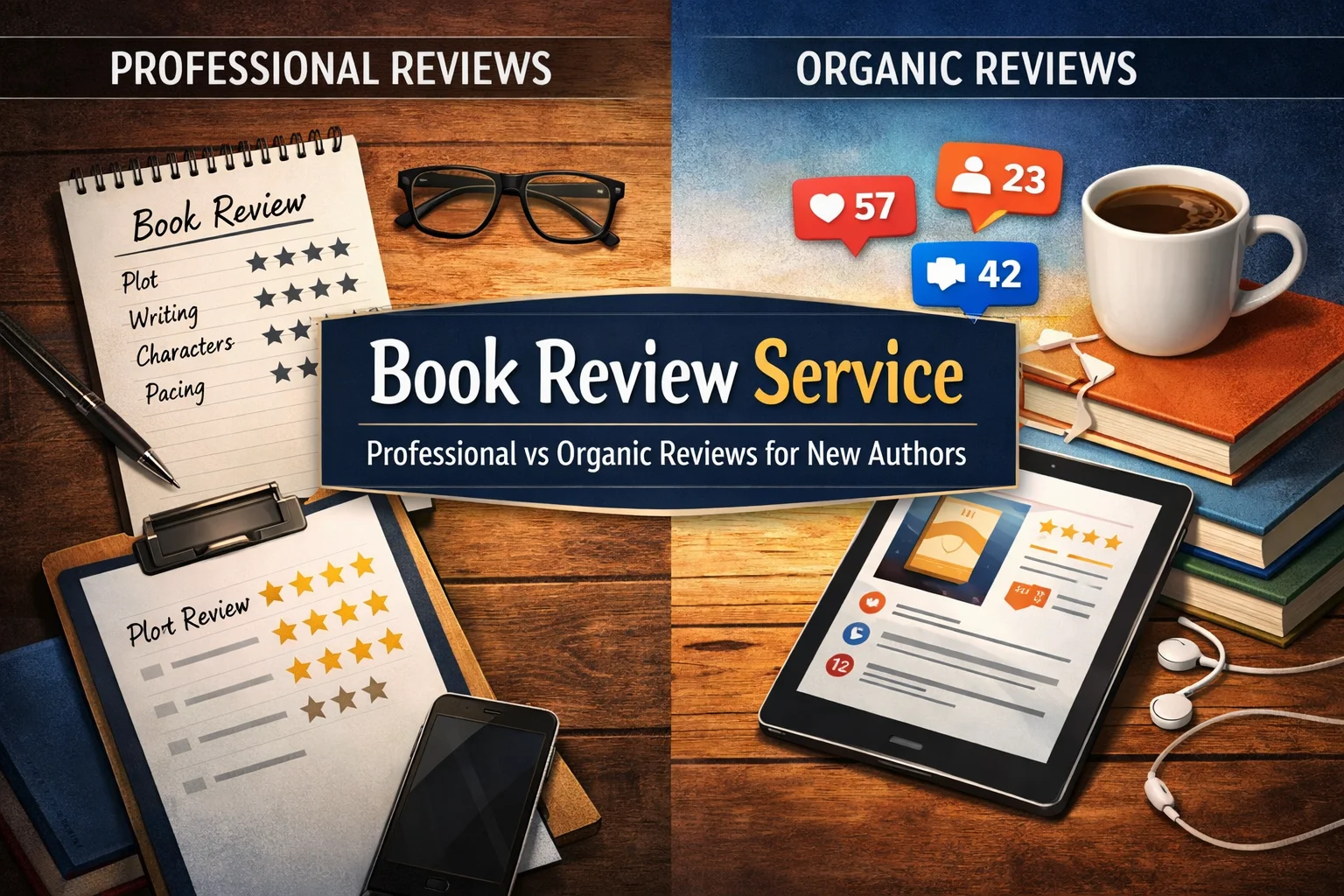
For this reason, many authors consider two main paths to gain reviews: encouraging organic feedback from readers or using professional review support. Explore our professional book writing services in the USA to understand how expert guidance can enhance your book’s reach. Understanding the strengths and limitations of each option can help you build a smart strategy for launching your book.
Why New Authors Need Book Reviews
Positive reviews act as a stamp of approval, creating a ripple effect that instills confidence in potential buyers and increases the perceived value of your book.” — Forbes Business Council
For authors just entering the publishing world, reviews play a critical role in visibility and credibility. They influence readers, algorithms, and even industry professionals.
Without early feedback, a book can easily disappear among millions of titles available on major online platforms.
The Role of Reviews in Building Credibility
Readers rely heavily on reviews when deciding whether to purchase a book. A collection of thoughtful reviews shows that others have read and evaluated the work.
This builds trust.
A book with no reviews often appears risky to buyers. In contrast, a book with multiple opinions and discussions signals legitimacy and reader interest. Even a small number of balanced reviews can help establish confidence in a new author.
Reviews also help demonstrate that the author takes their work seriously and values reader engagement.
How Reviews Influence Book Sales

book review writing service services do more than build credibility. They also influence how online platforms promote titles.
Many retail algorithms factor in review quantity and engagement when recommending books to readers. Titles with active review sections are more likely to appear in search results, recommendation lists, and category rankings.
Research from BrightLocal shows that over 90 percent of consumers read reviews before making purchasing decisions, and this behavior applies strongly to books and digital content.
Positive reviews often highlight strengths in storytelling, writing style, or subject matter. These insights help hesitant readers decide whether the book is worth their time.
The Challenges New Authors Face
While reviews are essential, getting them can be surprisingly difficult.
New authors usually start without an existing audience. Even readers who enjoy a book may not take the extra step to leave feedback. Many readers simply finish the story and move on.
Reaching out to friends or family can help at first, but those reviews may not always provide the objective perspective that future readers value.
Because of this slow start, many authors explore professional review assistance to build early momentum for their book.
Understanding Professional Book Review Writing Services
Professional book review writing services (Book review – Wikipedia) provide structured critiques written by experienced writers or literary analysts. These reviews typically evaluate important elements such as:
- plot development
- character depth
- writing style
- pacing
- overall reader impact
Rather than short promotional blurbs, these reviews aim to provide thoughtful analysis that helps readers understand what the book offers.
Many reviewers involved in book writing services USA have backgrounds in literature, journalism, or academic writing. Their goal is to produce reviews that are informative and balanced.
Well-written professional reviews can be used in several ways. Authors may include them on their website, in marketing materials, or as part of their promotional strategy.
Advantages of Professional Review Support
One of the biggest advantages of professional reviews is speed.
Organic reviews often take weeks or months to appear. Professional reviewers can provide feedback shortly after publication, which helps authors build early visibility during the important launch period.
Another advantage is structure and clarity. Experienced reviewers know how to communicate their thoughts clearly and present balanced criticism. This type of analysis can help potential readers quickly understand the strengths of the book.
For authors writing academic or specialized content, professional reviewers with relevant expertise can provide insights that general readers might not offer.
Organic Reader Reviews: Benefits and Limitations
While professional reviews offer structure and speed, organic reviews from genuine readers have their own unique value.
These reviews come directly from the target audience and often reflect real emotional reactions to the story.
Authentic Reader Perspective
Organic reviews feel natural because they are spontaneous. A reader who finishes a book and decides to write a review is usually motivated by genuine interest.
This authenticity helps build trust with future readers. Personal stories about how a book resonated emotionally or intellectually can be very persuasive.
Organic reviews also provide valuable feedback for authors. They reveal how readers interpret the story, which characters they connect with, and which themes leave a lasting impression.
The Slow Growth Problem
The biggest challenge with organic reviews is time.
A newly published book may sit for weeks before the first review appears. Without visibility, readers may not even notice the book exists.
Building organic feedback requires ongoing marketing efforts such as:
- engaging with readers on social media
- connecting with book bloggers
- creating an email newsletter
- participating in reader communities
These efforts take time and persistence.
Combining Both Approaches
Many experienced authors use a hybrid strategy.
Professional reviews can help create initial credibility during the launch phase. When readers see thoughtful feedback already attached to a book, they are more likely to take a chance on it.
Once readers begin discovering the book, organic reviews gradually start to appear. Over time, the balance shifts toward reader-generated feedback, which strengthens the long-term reputation of the book.
This combination allows authors to overcome the early visibility barrier while still building an authentic relationship with their audience.
Choosing a Reliable Review Service
If you decide to explore professional review support, choosing a trustworthy provider is important.
A reputable service should offer transparency about how its reviews are written and who writes them.
Look for providers that:
- share examples of past reviews
- explain their review process clearly
- guarantee original content
- respect confidentiality of manuscripts
Communication is another important factor. When reviewers understand the author’s goals, genre, and target audience, they can produce more relevant and insightful analysis.
Timely delivery also matters, especially if the reviews are part of a book launch strategy.
Final Thoughts for New Authors
Getting reviews is one of the biggest early challenges in publishing. Yet reviews remain one of the most effective ways to build credibility and attract readers. Organic feedback from readers provides authenticity and long-term trust, while professional review support—often offered alongside book editing services USA and book publishing services—can help authors gain early visibility and structured analysis.
Instead of viewing these options as competing strategies, many authors find success by combining them. Early professional feedback can generate momentum, while organic reader reviews gradually shape the book’s reputation over time. Ultimately, the goal is simple: help readers discover your work and give them confidence that your book is worth their attention. When reviews support that goal, they become one of the most powerful tools in an author’s publishing journey.
Top 5 FAQs for Your Blog
1. What is a book review writing service and why is it important?
A book review writing service is a detailed evaluation of a book’s content, style, and overall impact. It helps readers decide whether the book is worth their time and provides social proof for new authors. Well-crafted reviews can significantly improve visibility and credibility.
Reference: Book review – Wikipedia
2. How can professional book review writing services help new authors?
Professional book review writing services offer structured, unbiased critiques by experienced writers or literary analysts. These reviews can highlight strengths, provide constructive feedback, and give your book early credibility, helping it stand out in a crowded market.
3. What are the benefits of organic reader reviews?
Organic reviews come directly from your target audience, reflecting genuine emotional reactions and engagement. They build long-term trust, show authentic reader interest, and provide insights into how your book resonates with real readers.
4. Should I rely on professional reviews, organic reviews, or both?
Many successful authors use a hybrid strategy: professional reviews generate early momentum and credibility, while organic reviews build long-term trust and authenticity. Combining both ensures your book gains visibility while establishing a loyal reader base.
5. How do book reviews impact book sales and discoverability?
Reviews influence online algorithms, recommendation engines, and search rankings. Titles with multiple reviews are more likely to appear in search results and suggested lists. Positive reviews also help hesitant readers make purchase decisions by providing social proof and detailed feedback.